


Vitamin D Rapid Test

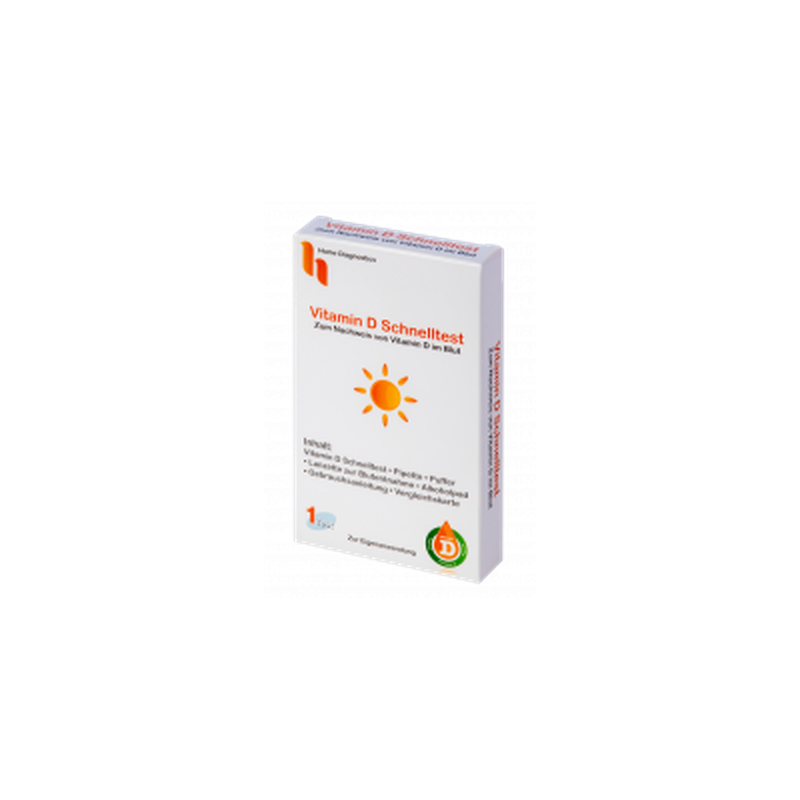
With the vitamin D rapid test, you can conveniently determine your vitamin D blood level from home. The blood sample is taken from the fingertip using a lancet. You will receive your test result within 10 minutes – without having to send anything to a laboratory.
Vitamin D – the sunshine vitamin
Vitamin D plays a role in cell division, among other things, and contributes to a healthy immune system and the maintenance of normal bones. Our body can produce the vitamin itself – provided there is sufficient exposure to sunlight. However, due to our modern lifestyle, many of us no longer spend enough time in the sun. This can reduce the body's own production of the sunshine vitamin.
Determine your vitamin D level yourself
With the vitamin D self-test, you can conveniently check your vitamin D level from home. By comparing it with a color scale, you can get an impression of whether you are sufficiently supplied with vitamin D or whether there is an insufficient supply, a deficiency, or possibly even an excess.
How the test works
The vitamin D level in the blood is determined using an immunoassay test procedure. The way it works is similar to well-known rapid antigen tests for home use: The sample is mixed with a buffer and migrates through the test cassette. The higher the concentration of vitamin D, the weaker the color intensity on the test line. A stronger band therefore indicates a lower vitamin D level.
The evaluation is carried out by comparing it with the included color reference. This allows you to estimate whether your vitamin D level is below 10 ng/ml, between 10 and 30 ng/ml, or between 30 and 100 ng/ml.
Scope of delivery
Rapid test, pipette, buffer, lancet device, alcohol pad, instructions, comparison card
The vitamin D rapid test is a certified and approved self-test in accordance with the IVD Directive 98/79/EC for determining vitamin D levels.
Properties:
- Result after 10 minutes, no laboratory submission required
- Simple blood collection via lancet from the fingertip
- Classification into three ranges: below 10 ng/ml, 10–30 ng/ml, 30–100 ng/ml
- Immunoassay test procedure with color reference card
- Certified self-test according to IVD Directive 98/79/EC
- Scope of delivery: rapid test, pipette, buffer, lancet device, alcohol pad, instructions, comparison card
Dosage
Directions:
Vitamin D Rapid Test
Couldn't load pickup availability
Customer reviews
Questions and Answers
Can I perform the vitamin D rapid test at home myself?
Which values can I read with the test?
How does the vitamin D rapid test work?


2 × SanoMit® Q10 10 ml free of charge
Subscribe to our newsletter and receive two trial bottles of SanoMit® Q10 – free with your next order.

Articles and studies
View all-
Publication

Chronic fatigue syndrome
CFS: Patients suffer from permanent physical and mental exhaustion of unknown origin, which cannot be improved, or only slightly improved, by rest periods. Doctors define CFS as chronic fatigue when...
read moreChronic fatigue syndrome
CFS: Patients suffer from permanent physical and mental exhaustion of unknown origin, which cannot be improved, or only slightly improved, by rest periods. Doctors define CFS as chronic fatigue when...
read more -
Patient information

Autism and ADHD
The manifestations of attention deficit hyperactivity disorder (ADHD) and autism are different expressions of the same underlying disorders. Both are developmental disorders that begin in childhood.
read moreAutism and ADHD
The manifestations of attention deficit hyperactivity disorder (ADHD) and autism are different expressions of the same underlying disorders. Both are developmental disorders that begin in childhood.
read more


